Since I have enjoyed using the "blog sphere" as a place to set out thought, I have decided (during this hiatus) to start another blog to put stuff up for comment.You can check it our at:
Joe's Sermon Notes
Tuesday, September 4, 2007


Wednesday, August 29, 2007
Labor Day Hiatus -- Luke 14:1, 7-14
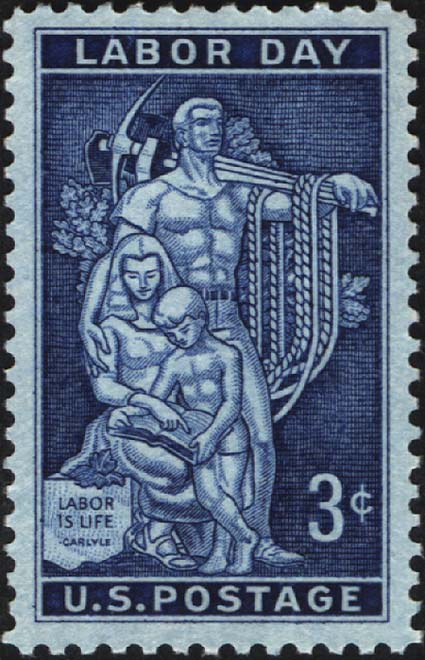
For nine weeks I have worked through Galatians and now its time to take a short break. I expect to be back to this Galatians series later in the month or October 14th. We have many exciting programs starting up in September and these must be supported and celebrated.
This weekend is Labor Day and I want to explore the relationship between the Christian faith and our work life -- work life as a volunteer, a homemaker, or as one who works a "regular job."
The Presbyterian/Reformed tradition has long held (since the time of John Calvin) that one can find in their work since it is rooted in God's desire for humanity to live in community. Work is a central part of the communal life. No matter what we do: bus tables, teach physics or kindergarten, serve as an elected public official, postal worker, or . . . . . , we are living out a calling from God to be alive in human community. Since work is necessary and desirable, each worker is due his or her wage for a good day's work. The wage must be a livable wage not a minimum wage. Also, the goal of full and fair employment is part of our Christian social ethic.
I will explore this topic using the gospel lectionary reading from Luke 14:7-14. Here is the passage from the NRSV:
While it is easy to see in Jesus' teachings that people within the Christian faith are called to a life of humility, this is not to be confused with a life which tolerates oppression, of ourselves or others.On one occasion when Jesus was going to the house of a leader of the Pharisees to eat a meal on the sabbath, they were watching him closely.
7When he noticed how the guests chose the places of honor, he told them a parable. 8“When you are invited by someone to a wedding banquet, do not sit down at the place of honor, in case someone more distinguished than you has been invited by your host; 9and the host who invited both of you may come and say to you, ‘Give this person your place,’ and then in disgrace you would start to take the lowest place. 10But when you are invited, go and sit down at the lowest place, so that when your host comes, he may say to you, ‘Friend, move up higher’; then you will be honored in the presence of all who sit at the table with you. 11For all who exalt themselves will be humbled, and those who humble themselves will be exalted.” 12He said also to the one who had invited him, “When you give a luncheon or a dinner, do not invite your friends or your brothers or your relatives or rich neighbors, in case they may invite you in return, and you would be repaid. 13But when you give a banquet, invite the poor, the crippled, the lame, and the blind. 14And you will be blessed, because they cannot repay you, for you will be repaid at the resurrection of the righteous.”
Well, join me on Sunday as we thank God for the gift of our labor and to commit ourselves to actions which will bring about justice for sisters and brothers in the workplaces throughout the world.
Some other web sites you might wish to look at:
Interfaith Worker Justice
Presbyterian Resources for Worker Justice (down loadable pdf file)
Monday, August 13, 2007
Galatians 3:19-4:7 (Reading for August 19, 2007)
Here is the next installment. Paul has had some pretty hard things to say about the Law and the readers might rightly think that Paul has no regard for the Law or dismisses it out of hand. In this section, he try to clarify why the Law came about.
The Purpose of the Law
19 Why then the law? It was added because of transgressions, until the offspringi would come to whom the promise had been made; and it was ordained through angels by a mediator. 20 Now a mediator involves more than one party; but God is one.
21 Is the law then opposed to the promises of God? Certainly not! For if a law had been given that could make alive, then righteousness would indeed come through the law. 22 But the scripture has imprisoned all things under the power of sin, so that what was promised through faith in Jesus Christj might be given to those who believe.
23 Now before faith came, we were imprisoned and guarded under the law until faith would be revealed. 24 Therefore the law was our disciplinarian until Christ came, so that we might be justified by faith. 25 But now that faith has come, we are no longer subject to a disciplinarian, 26 for in Christ Jesus you are all children of God through faith. 27 As many of you as were baptized into Christ have clothed yourselves with Christ. 28 There is no longer Jew or Greek, there is no longer slave or free, there is no longer male and female; for all of you are one in Christ Jesus. 29 And if you belong to Christ, then you are Abraham’s offspring,k heirs according to the promise.
Friday, August 10, 2007
Galatians 3:1-14 (Reading for August 12, 2007)
One more time I am revisiting a passage I already spoke about.
Go below and reread Galatians 3:1-14. I will be looking more closely at verses 6-9, and in particular, verse 7, "those who believe are the the descendants of Abraham."
Go below and reread Galatians 3:1-14. I will be looking more closely at verses 6-9, and in particular, verse 7, "those who believe are the the descendants of Abraham."
Monday, July 30, 2007
Galatians 3:1-14 (Reading for August 5, 2007)
To get through the book of Galatians in a timely manner, we must move on. I still believe there is much to plumb in 2:15-21. I have highlighted the central questions Paul places before the Galatians, I will focus our attention on exploring these questions. I just want to keep in front of us, what I believe is the central theme in Galatians, "we are justified by grace through faith." Here is the NRSV translation of 3:1-14:
Law or Faith
(Cp Rom 4.1—25)
3 You foolish Galatians! Who has bewitched you? It was before your eyes that Jesus Christ was publicly exhibited as crucified! 2 The only thing I want to learn from you is this: Did you receive the Spirit by doing the works of the law or by believing what you heard? 3 Are you so foolish? Having started with the Spirit, are you now ending with the flesh? 4 Did you experience so much for nothing?—if it really was for nothing. 5 Well then, does Goda supply you with the Spirit and work miracles among you by your doing the works of the law, or by your believing what you heard?
6 Just as Abraham “believed God, and it was reckoned to him as righteousness,” 7 so, you see, those who believe are the descendants of Abraham. 8 And the scripture, foreseeing that God would justify the Gentiles by faith, declared the gospel beforehand to Abraham, saying, “All the Gentiles shall be blessed in you.” 9 For this reason, those who believe are blessed with Abraham who believed.
10 For all who rely on the works of the law are under a curse; for it is written, “Cursed is everyone who does not observe and obey all the things written in the book of the law.” 11 Now it is evident that no one is justified before God by the law; for “The one who is righteous will live by faith.”b 12 But the law does not rest on faith; on the contrary, “Whoever does the works of the lawc will live by them.” 13 Christ redeemed us from the curse of the law by becoming a curse for us—for it is written, “Cursed is everyone who hangs on a tree”— 14 in order that in Christ Jesus the blessing of Abraham might come to the Gentiles, so that we might receive the promise of the Spirit through faith.
a Gk he
b Or The one who is righteous through faith will live
c Gk does them
Monday, July 23, 2007
Galatians 2:15-21 -- A Second Time

After spending time with this passage to be preached on July 22nd, I decided this passage was so "big" that it would take more than one week to cover what is presented by Paul. So, I invite you back to passage, Gal 2:15-21, an live with it for another week. This is my plan. While on the 22nd I focused the sermon on the foolish ways we try to justify ourselves, on the the 29th I will look to explore what it means to have faith.
These theological concepts are "big" in our Reformed/Presbyterian tradition. The Reformation of the 16th century, these thoughts were pivotal in a new message and mission for the church. It is sad that it took a schism within the church -- the split in the church that lasts today with a division between the Protestant churches and the Roman Catholic Church.
Well, let's see where this passage will take us.
Thursday, July 19, 2007
Paul's Rhetorical Style
One of the ways scholars approach Paul’s letters is through the study of his “rhetorical style.” In fact, one of the new forms of biblical analysis is referred to a “rhetorical criticism,” to go side by side with textual criticism, historical criticism, redaction criticism, and literary criticism. Each of these biblical studies methods help us get closer and closer to what the author(s) might have wanted to communicate to their audience. A good Bible dictionary will help you look up these different methods of approaching the biblical narrative.
Now, back to rhetorical style. In popular use, rhetoric is used as a put down term or negative evaluation of speech; “it is all rhetoric” as a critique of politician’s endless words. Behind this is a suspicion that each speaker will try to manipulate the hearer to get him or her to do something the speaker wants for the speaker’s benefit or even a falsehood. However, there is a rhetorical style that Paul uses that was used by educated Greeks of his day. Rhetoric was seen as an art form – an art form of presentation, persuasion and argument. In Paul’s usage, his words were designed to have an effect on the reader/hearer.
John Calvin had a method of Bible study that asked the reader to read “closely” the text. This type of reading was to see the plain sense of the words as they lay out on the page. He was not looking to simplify the content of the passage. He was trying to get the reader to stay with the text, turning it over and over, mining it for meaning. He looked for shades in meaning and nuance that were actually there. These characteristics became more apparent with reading a passage time after time in different historical setting.
Seeing Paul’s rhetorical style close up can make us scratch our heads and wonder why he says the things he says in the way he says them. His arguments are often “dense.” But I would suggest that Paul’s letters are like a dense forest and is a wonderful place to visit. The denser the trees, the foliage, the undergrowth and the animal life, the more there is to see and learn. However, moving through a dense forest requires patience and sometimes hard work just to go a few feet. So with Paul’s letters. It takes time; it takes work. The time and work we put into discovering Paul’s rhetorical style brings us much to appreciate in his teaching about the reality of Christ’s love for you and me.
The sermons connected to this Galatians series do not allow me to go into all the finer details each Sunday (they are already long enough). This might be a path you might journey on through these summer months. I will be glad to answer specific questions.
If you are more interested in rhetorical style, you might go to Aristotle's Rhetoric. I believe he was the first Western philosopher to write on this subject in detail.
Subscribe to:
Posts (Atom)
